
Automation anxiety: Park Chan-wooks No Other Choice is a morbidly hilarious satire
Chama Al Houari (f. 2002) is an aspiring filmmaker from Morocco and Montages’ editorial assistant. She is currently living in Oslo, and is passionate about film history and how movies reflects the world.
*
Kosmorama 2026: After his award-winning feature Decision to Leave released in 2022, Park Chan-wook is back with a morbidly hilarious satire of the near future. No Other Choice predicts the coming bloodbath.
Automation anxiety is making its long awaited comeback from the 1800s, a time when the artisan class began losing its supra-proletarian status to mass production. As artificial intelligence and sophisticated machinery increasingly outperform the professional class, the apocalyptic threat of job displacement naturally occupies the collective consciousness of the highly educated.
This exact tension is what Park Chan-wook thinks makes for a hilarious dark comedy – and it absolutely does.
Adapted from Donald Westlake‘s novel The Ax (adapted by Costa-Gavras in 2005), No Other Choice kicks off with our protagonist, Yoo Man-su (Lee Byung-hun), as a relatively wealthy paper industry supervisor, enjoying a premium middle class experience – the full house, dogs, wife and kids package. Lee Byung-hun masterfully portrays Man-su with a blend of comical madness and vulnerable desperation.
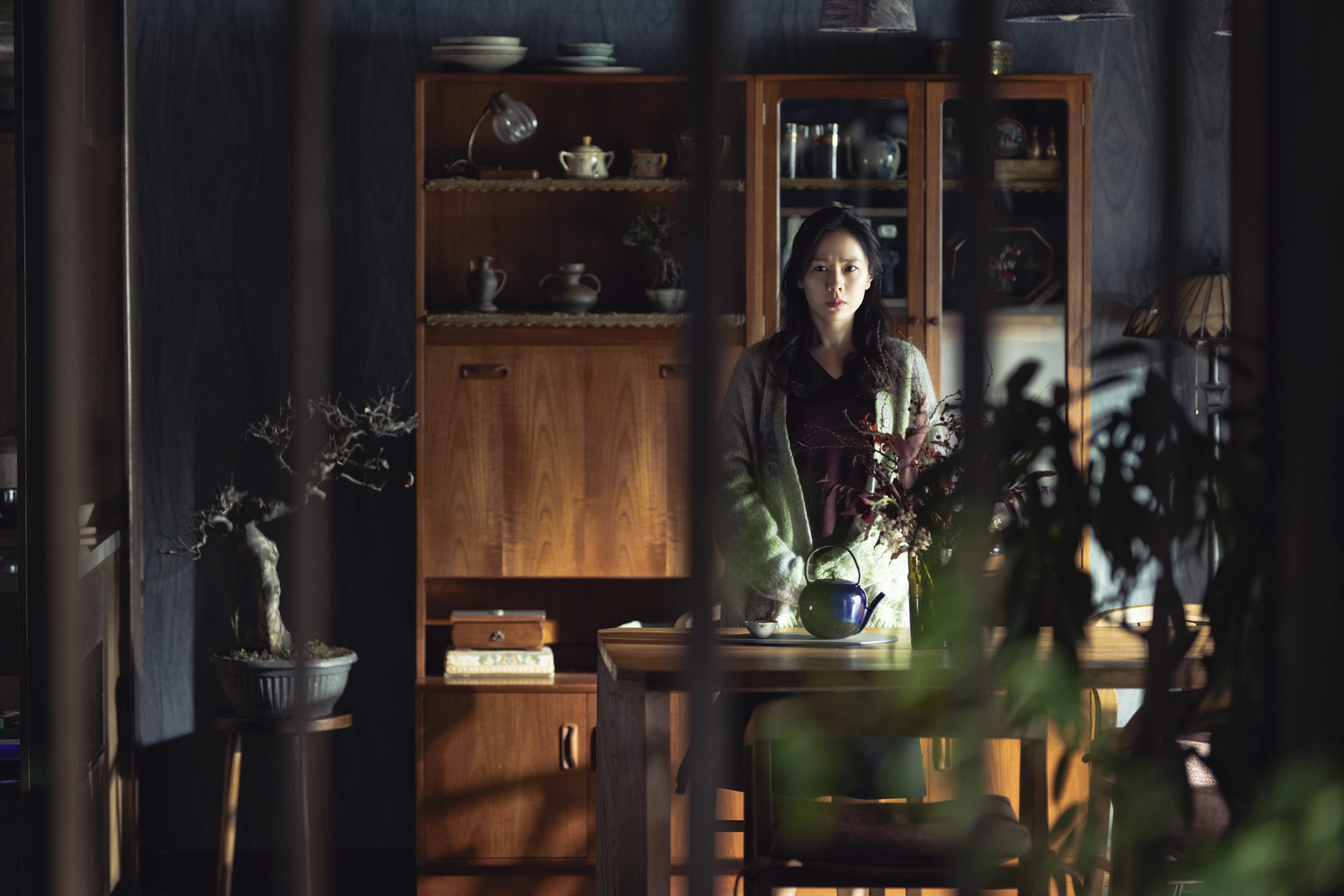
After a devastating lay-off ends his 25 years at Solar Paper, Man-su’s Korean-flavored white picket fence lifestyle is turned upside down. This nightmare scenario ignites a series of ridiculous, thrilling, and cartoonish events, stitched together by playful editing.
Cross dissolves and gorgeous split screens juxtapose the different genre sensibilities the film taps into: a crime scene dissolves onto the family home, a searching flashlight becomes a watchful moon.
The camera-work is also evocative, with angles that feel voyeuristic throughout the film, as though the characters are being spied on, or watched through security cameras – a sort of visual tension which never resolves. The score, however, balances the charged visual language with a soundtrack featuring retro Korean tunes and cello. A choice that helps sustain the film’s tonal ambiguity, never fully letting it slide into serious darkness.
From barbecues at the family home, to elaborately executed serial homicide schemes – the comedy and the gore are similarly poignant, both draw from the same absurd reality. A loose cannon that sits right at the intersection of economics and psychology.
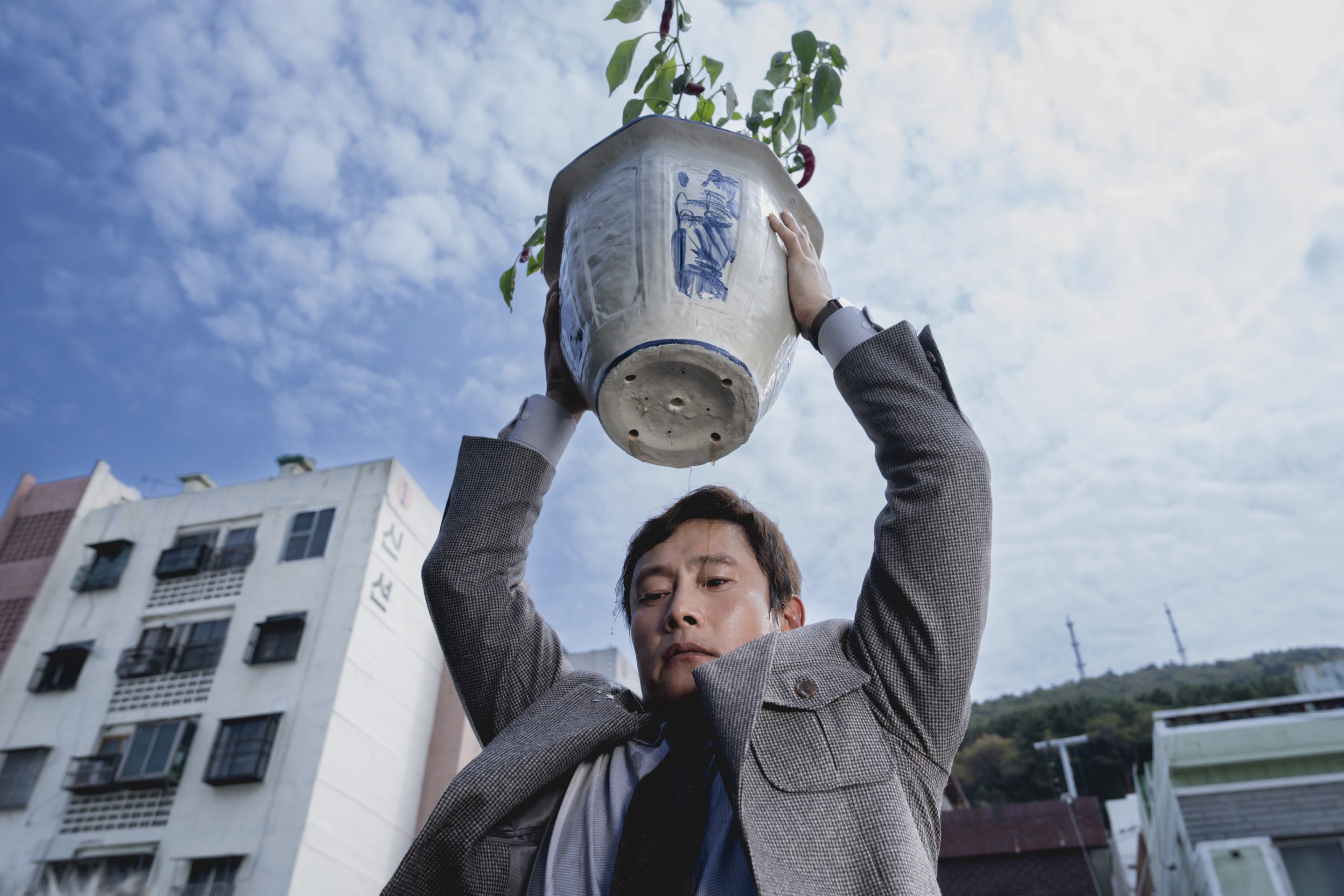
Man-su, now out of the workforce, struggles to accept a drastic loss of social prestige and financial comfort. His daughter’s classical music lessons, his house and pets are all on the line as unthinkable collateral. After repeatedly failing to find another paper industry job, he fights to keep the lifestyle – not by adapting or raging against the system, but by eliminating the competition.
Man-su devises a comically evil scheme to gather information on his rival jobseekers, and get them out of his way for good. Though he does briefly take on a grocery store job, deemed beneath him, Man-su is dead set on a dying paper industry. At no point does it occur to him not to cling to a declining field, where he himself is no longer of use – even though it is suggested multiple times throughout the film. No Other Choice ironically points at the middle class refusal to self-reinvent or accept downward class mobility.
For many of those who were promised stability in exchange for expertise, the precarity and humiliation of belonging to the working class is a terrifying prospect. This systemic betrayal, along with a lack of social safety nets, only incentivizes an even more brutal type of individualism – jobseekers climbing over corpses to reach the few middle-management positions left.
This mindset permeates Man-su’s outlook beyond the job market; he even advises his young son to lie to get out of trouble with the police, and condemn his friend instead. As he says “Our family is at war”.
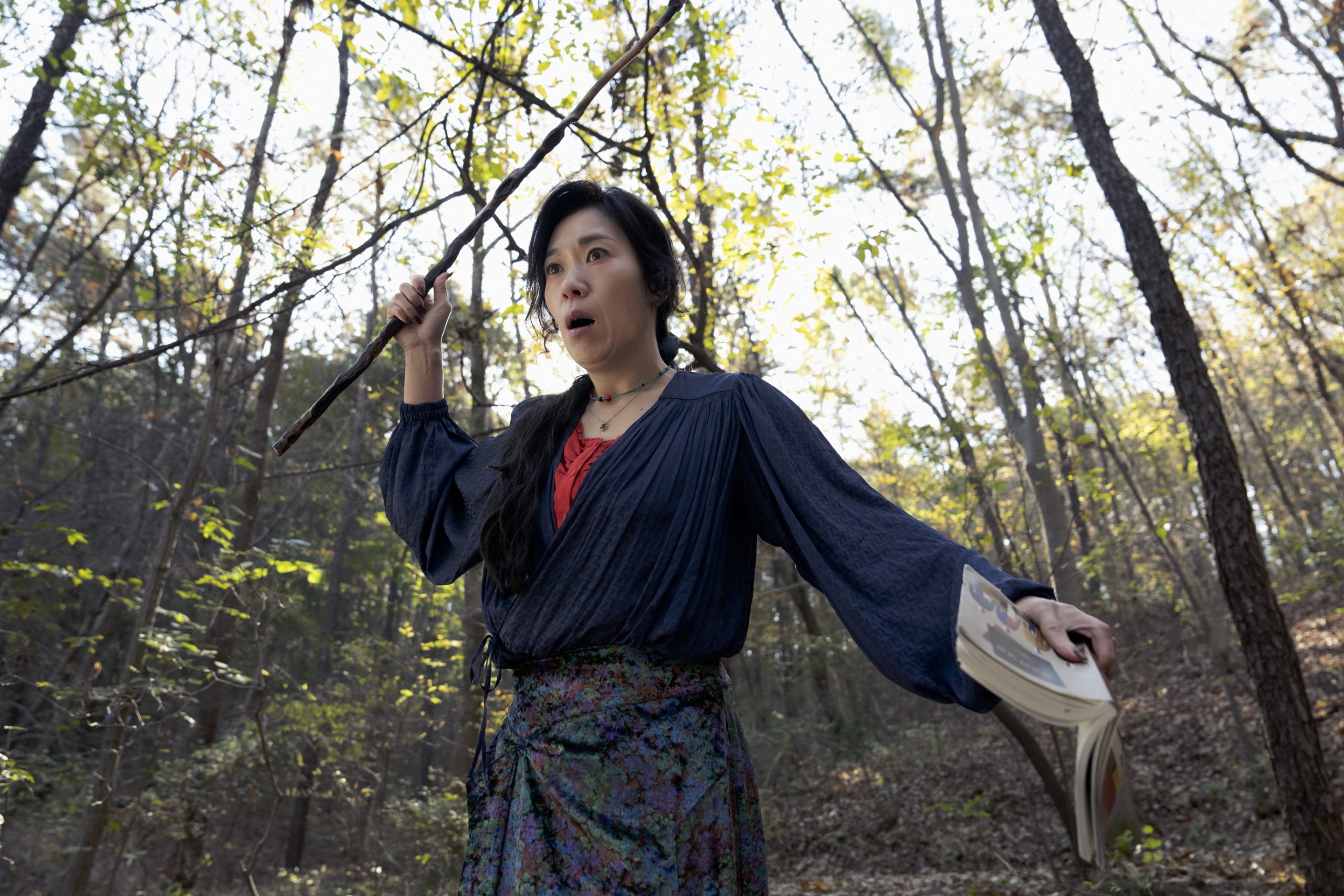
Park Chan-wook‘s thesis is clear: When work is tied to status, and status tied to identity, the end of work is the death of self. Wook’s commentary is much more sophisticated than a simple denunciation of workforce reduction; it interrogates the essential capitalistic notion that equates worth with work– and most importantly, exposes the middle-class aversion to change.
As Yeom Hye-ran’s character tells her recently laid-off husband – who also refuses to consider any other career path out of entitlement – ”the problem isn’t that you were fired, it’s how you’re handling it”.
Where No Other Choice might suffer, is at the hands of American Psycho levels of misinterpretation, with audiences over-identifying with Man-su and applauding him as a result. What is essentially a critique of the violence created by brutal systems, runs the risk of being read as an endorsement of the violent individual.
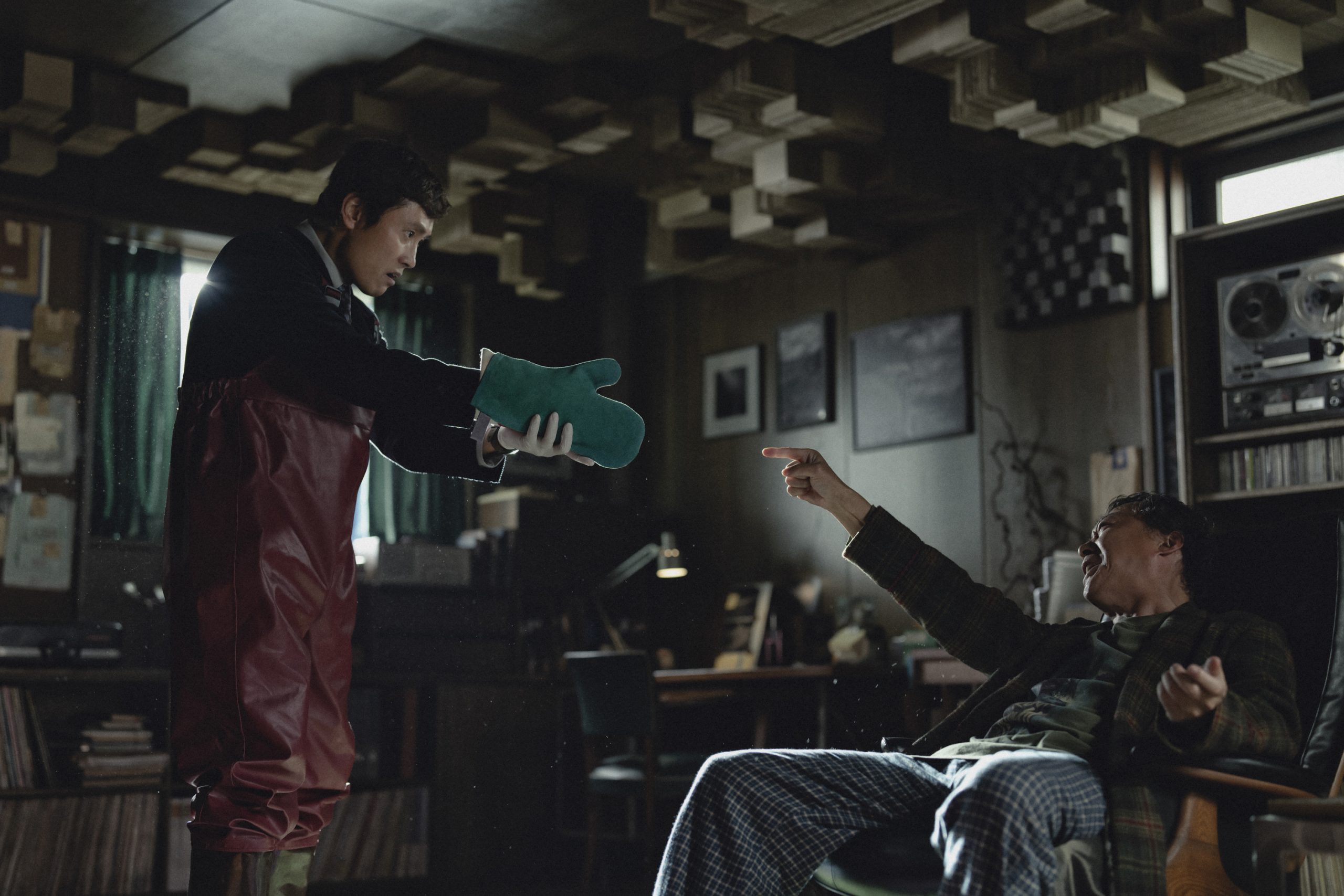
Though Park’s commentary clearly touches on the callous nature of capitalist job markets, the maladaptive psychology of the middle class is the main object of exposure, inviting the idea that a world in rapid transformation requires the agility to accept that things cannot stay the same. This exposes the panicked professional class as essentially conservative, concerned mainly with the preservation of status – while the working class has been struggling with job automation for decades already.
Most importantly, this sort of reading introduces a notion of collective responsibility in contrast to the rugged individualism showcased in the film; it might be time to begin imagining a future together. A future which preserves human dignity while preparing for the coming changes – lest we end up in a bloodbath.
In this sense, No Other Choice might reveal itself to be a vital film of our times, viscerally capturing the anxious present with a cautionary foreshadowing of the future. In an era of boiling class anxiety, Park Chan-wook asks whether we’re willing to think beyond the system, or continue climbing over each other’s corpses for jobs that no longer exist.