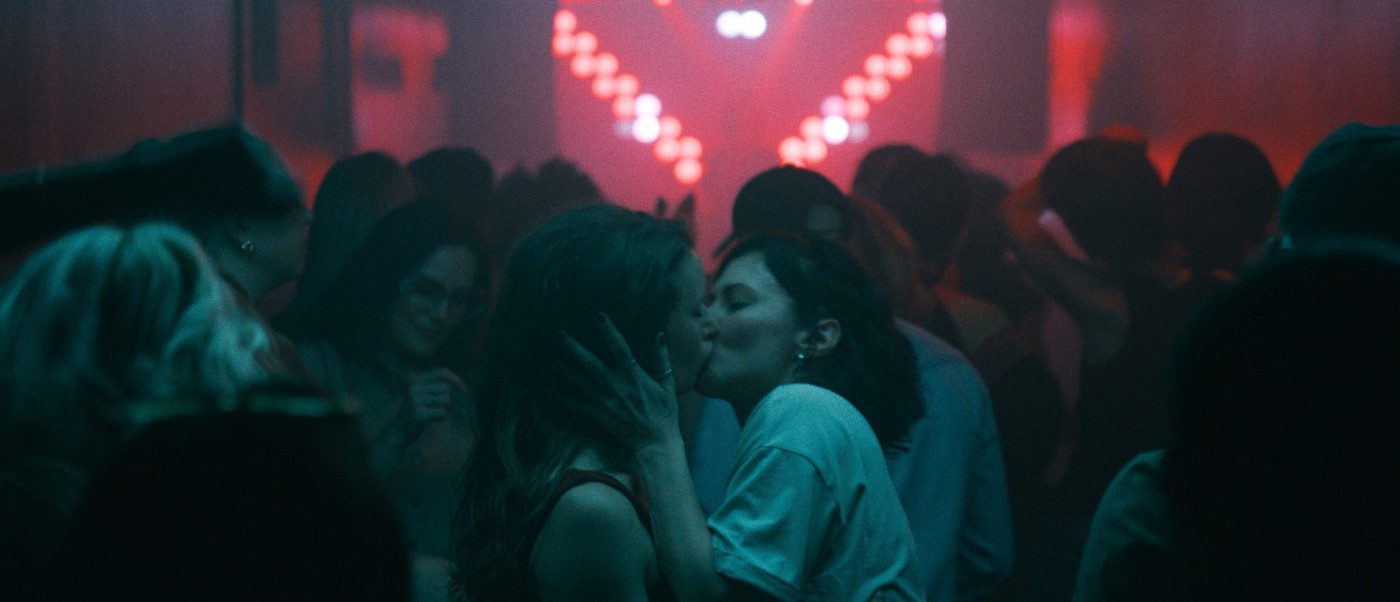
KVIFF at War (2026): Defences Breached but Movies Endure
P. Stuart Robinson (b. 1958), is an Associate Professor in Political Science at the University of Tromsø. He writes academically about the politics of film, and has published in such scholarly journals as Alphaville, Apparatus and Nordlit.
*
Karlovy Vary (KVIFF) 2026: The world is at war and no-one’s immune to its pervasive fever – not even our faithful ‘intelligentsia!’
So, treat this as a bulletin from your self-styled war correspondent. I’m sorry to report heavy casualties, mercifully only the symbolic kind, and mostly the victims – shockingly – of ‘friendly’ fire. Strangely, there are few battlefields more shrouded in the proverbial fog of war than that enjoined by our celebrated luminaries.
Ever felt caught up in an important historical moment, the end of an era or the start of a catastrophe? I feel it here at the 60th edition of the Karlovy Vary International Film Festival (KVIFF). How joyous that first festival must have been, back in the first flush of victory, the first summer of peace after the long, grinding catastrophe of World War II! Now, 80 years later, as we convene once again in old Bohemia’s premier spa town, it feels like a whole new round of hostilities is already well under way.
The festival, with its army of peace-loving poets and intellectuals, and the films they make and watch, can be a beacon to guide us through and out of conflict, oppression and violence – but not necessarily! For not even the festival is immune to the insidious social gangrene of war. Worse, its immunity may be uniquely weakened this time around.
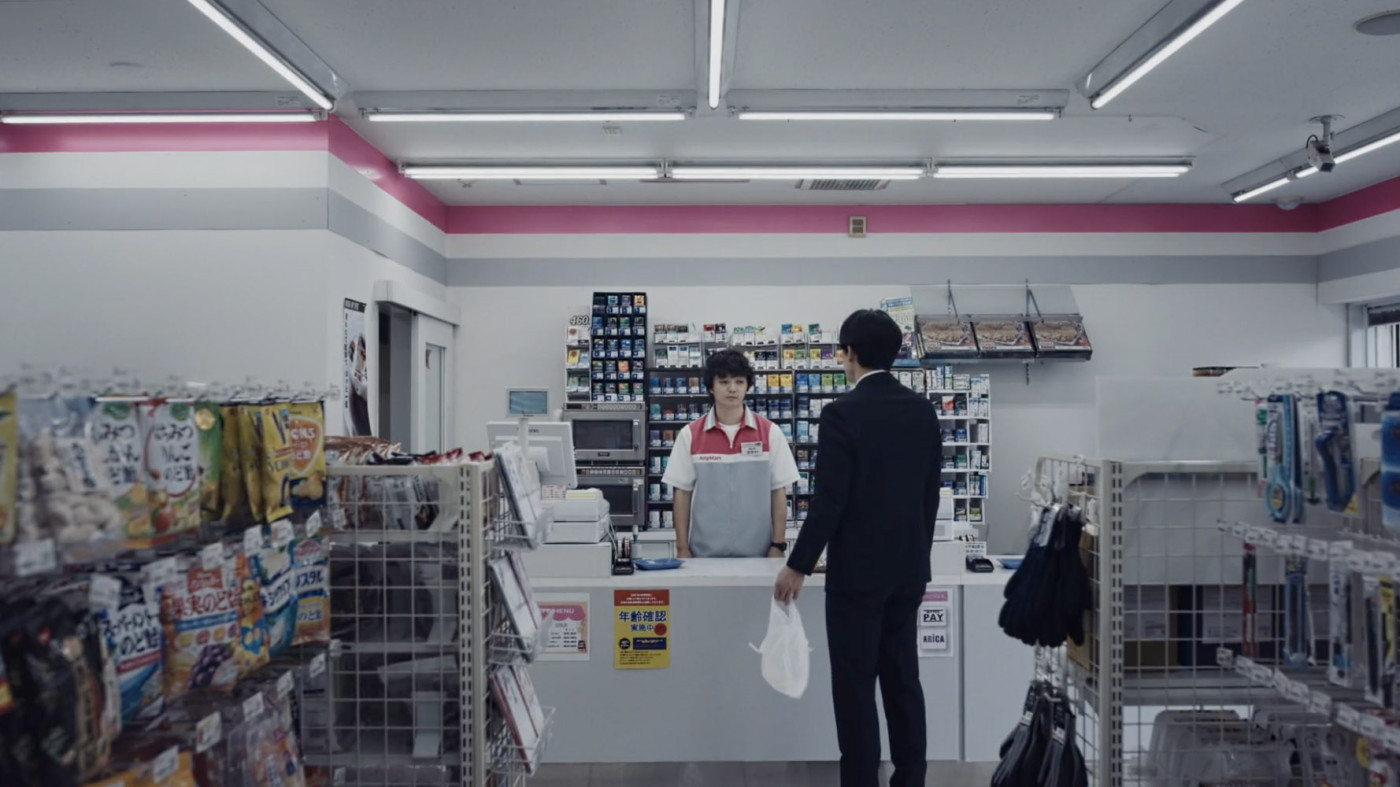
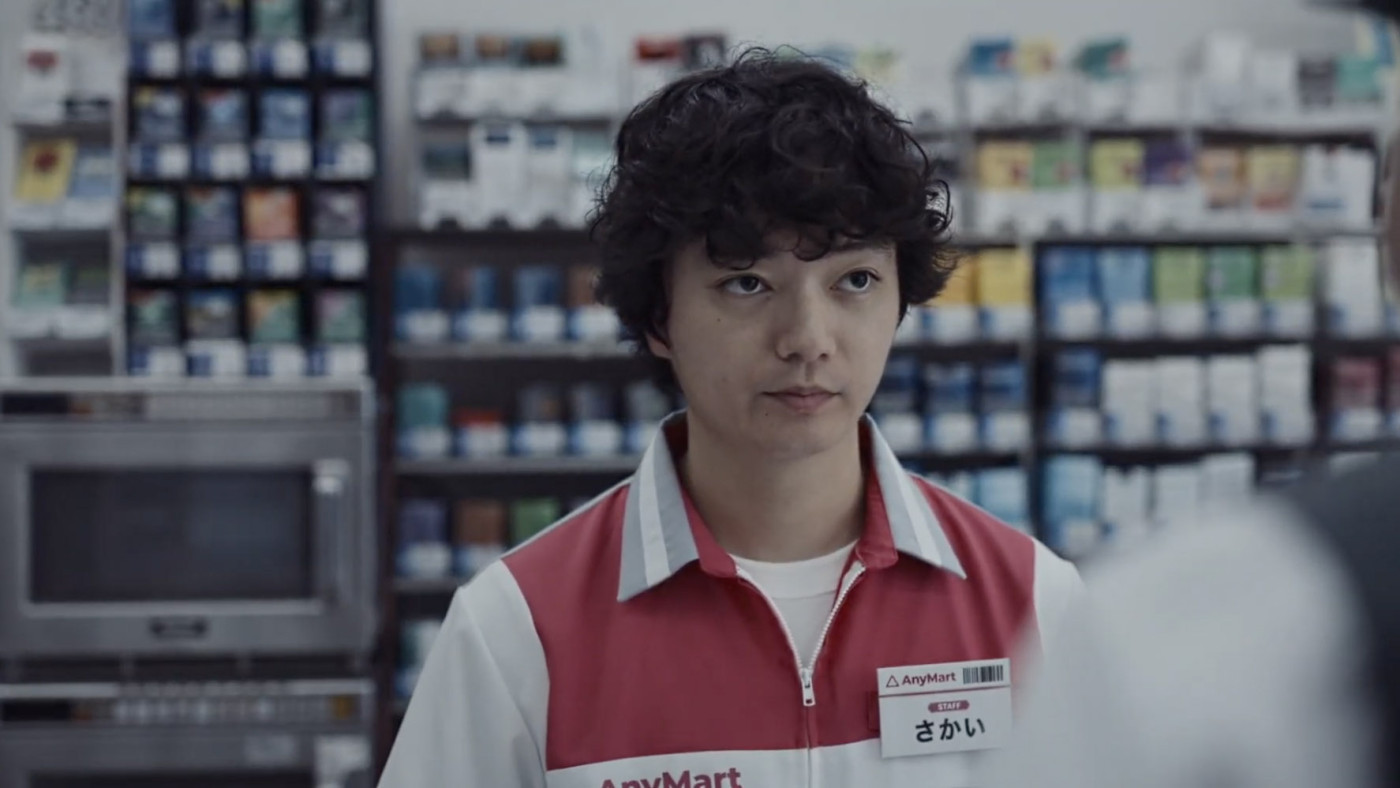
Shock treatment may be necessary and there’s none better than Yusuke Iwasaki‘s AnyMart («Chirudo», 2026). The film takes us deep into the dead space of the soulless convenience store: Customers quibble about trifles they themselves hardly care about; indifferent retailers struggle even to feign interest. The exquisitely impassive Sakai, played brilliantly by Shota Sometani is demoralisation personified. This is fertile ground for horror. We’ve been softened up – by taking away the will to live.
So, by the time the atrocities erupt from the blank slates of our fully alienated retailer-automatons, we are so ready, and we get the shock therapy we so need and deserve. Iwasaki’s nightmarish social commentary is a proper wake-up call, exposing the primordial link between alienation and violence. Here, in their full satiric horror, are the economic and social roots of a burgeoning global civil war. Is there a more powerful metaphor for this than the rampaging shopkeeper?
Film at its best expands our horizons. At its worst it tucks us deep inside them, settling our collective gaze on the bric-a-brac we already think we know. I saw many films at Karlovy Vary, but I want to highlight two that emphasise the contrast. It’s not only a report from the front, then, it’s an observation of history-in-progress, a sketch of the lines of conflict and violence, truth and make-believe, including the ghostly outlines of a potential though by no means guaranteed path to redemption.
The bad news from the front is exemplified by a film like Andrius Blaževičius‘s How to Divorce During the War («Skyrybos karo metu», 2026). It’s a good film on one level, an absorbing and even claustrophobic relationship drama played out in dynamic counterpoint to the unfolding regional catastrophe of the war in Ukraine. Indeed, this is part of my problem with the film, the high level of craftmanship and the considerable unqualified praise it has thus engendered since its premiere at Sundance, in January.
For I have a serious, even geopolitical problem with the film, and especially how this hardly seems to be a problem for anyone else. Its conspicuous absence from the sphere of critical reflection is an ominous sign of the times. I watched with a friend whose judgement I usually trust. Her warm approval was the mirror image of my cold disdain. I of course dismiss the idea there’s something wrong with me rather than the world-at-large, better to put the world in the dock and make my case for the prosecution.
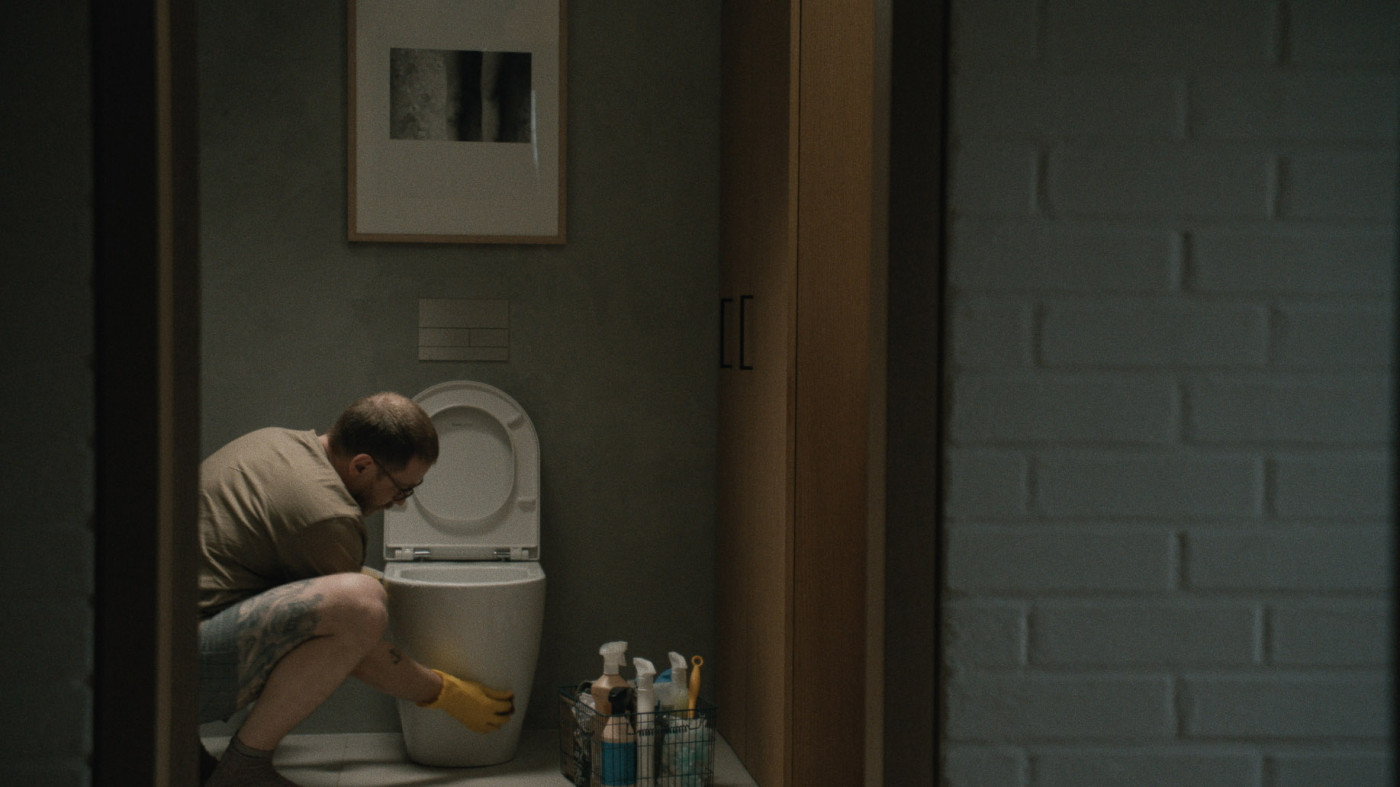
The film just concedes too much territory, albeit entirely the symbolic variety. Marija (played by Žygimantė Elena Jakštaitė) drops a veritable bombshell in the lap of her husband, Vytas (Marius Repšys): she wants a divorce. The breakup quickly turns verbally violent. As tempers fray, she compounds the pain of rejection with a diatribe about his many shortcomings. They separate just as, not so many miles away, armies engage and a full-scale war breaks out. It’s 2022 and Russia has just invaded Ukraine.
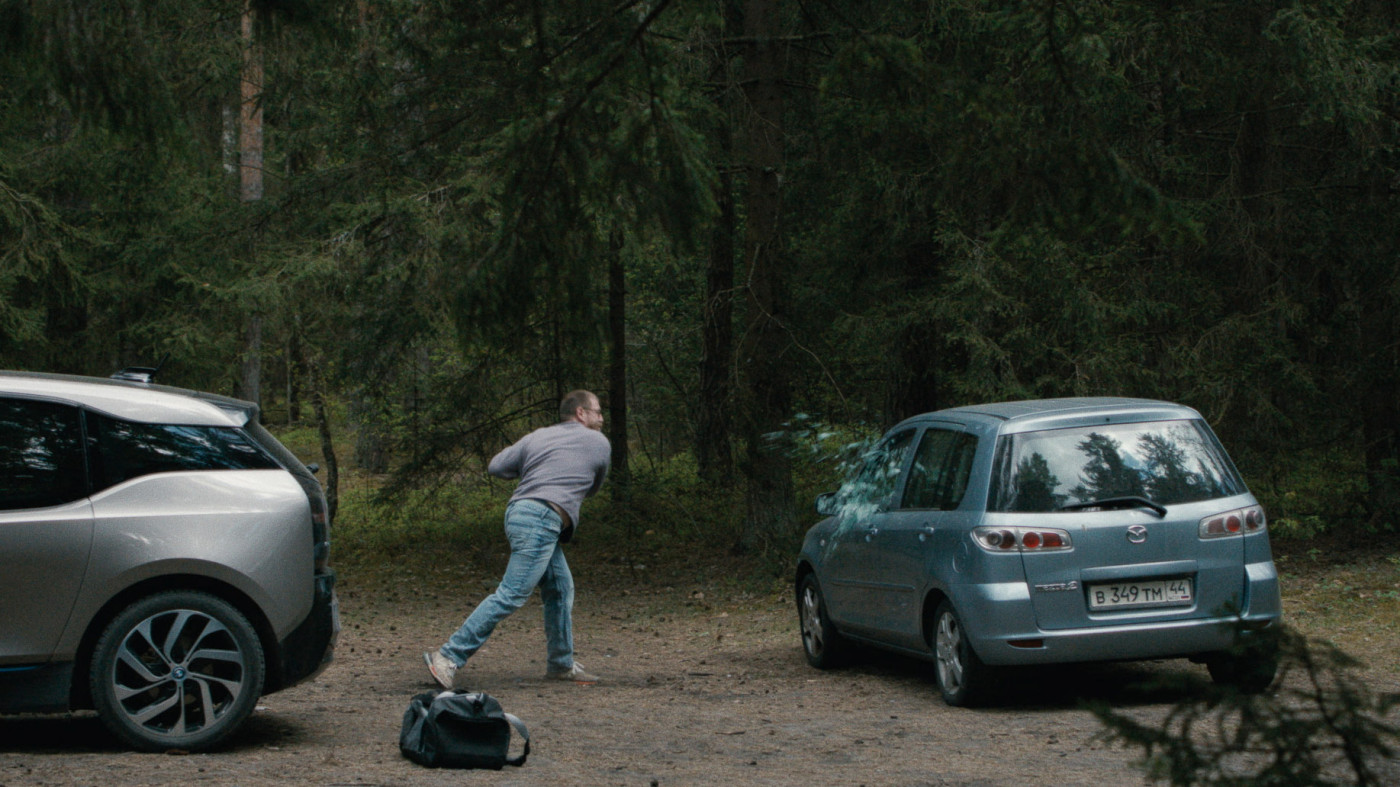
The premise is interesting. Psychologists tell us that context shapes behaviour much more than personality, but who takes any notice of that? We’re more likely to ignore the surrounding circumstances and attribute everything to ‘who they really are.’ He stopped being the fun, resourceful guy she used to love. Why? Well, circumstances had changed. She dumps him but then, hey presto, circumstances change again. Now he’s found an outlet for his creativity as he authors and orchestrates the kind of artsy anti-war protest that gets lapped up by national TV. He also helps refugees by fetching and carrying, supports the war-effort by breaking the windows of any cars with Russian plates – no, wait a minute!
Plot spoiler alert: Many of my fellow spectators laughed heartily at the sight of our hero finally being chased and beaten by one angry car-owner and his mates. Do I have no sense of humour? I should laugh as I embrace the armed struggle and its contradictions, but I falter in doubt. I use ‘hero’ advisedly. The unlikely reconciliation of the newly separated couple invokes an ancient trope of battle: The wife of the ‘hero’ tends his war-wounds; love blossoms from the kernel of courage under fire – or a good kicking from indignant Russian car-owners.
The movie plays for laughs of course. I was tempted to excuse it under the flag of irony. It seems to say: Look how far we are driven by the exigencies of war, how ridiculous we become! It won’t do. The work trades on a facile elision of state war-machine and ethnic Russians, transforming rightful condemnation of Putin into the raw material of xenophobic hatred. You were wondering who they are and what they’ve done? Just check their plates!
The elision runs like a cancer through the film. The troubled daughter, who gets into a fight with a Russian schoolmate, expresses the wish for all Russians to go home. Her mother does not react. What’s absent is always the most telling. There’s nothing ironic about the narrative at this point. The film forfeits that get-out-of-jail-free card by its tacit acceptance of ‘understandable’ anti-Russian feeling. This is the litmus test of whether the film reproduces and even amplifies the conflict or reflects and critiques it. For all its filmic virtues, How to Divorce During the War bombs (pardon the expression) this most important test.

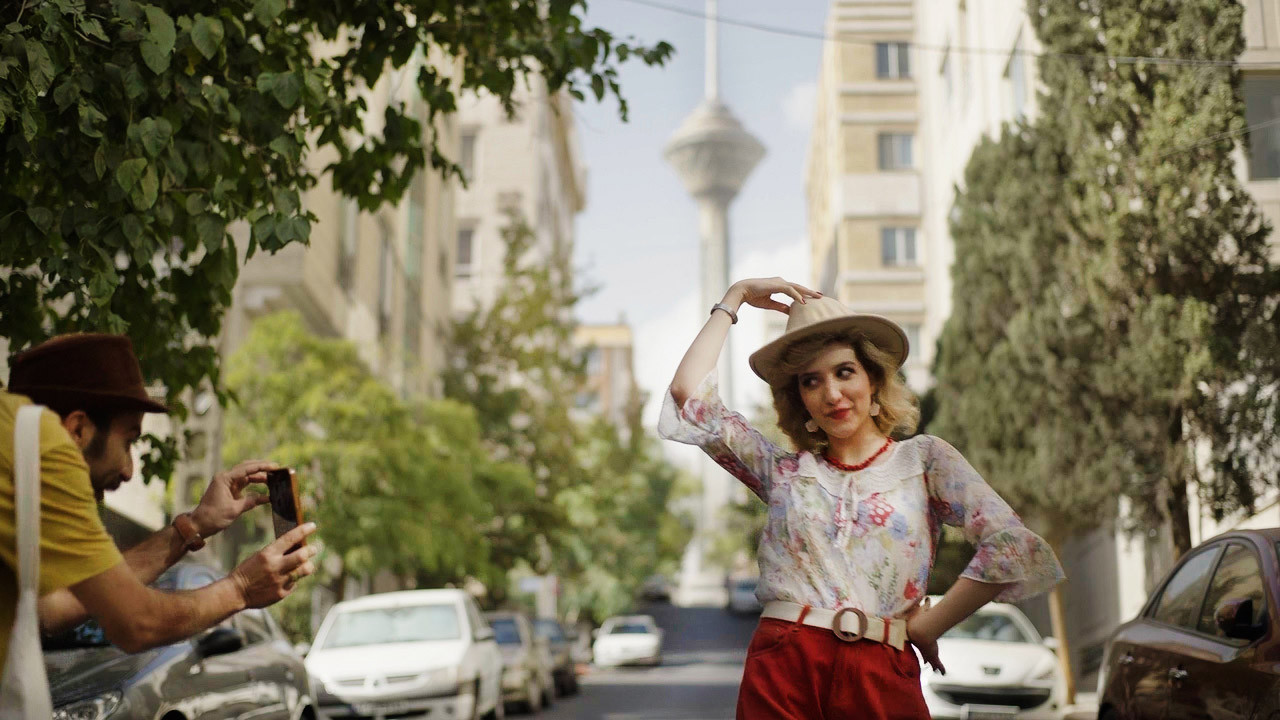
Maryam Ataei and Hossein Keshavarz‘s The Friend’s House Is Here («Khaneh doost injast», 2025), by contrast, draws something from a warzone to serve the cause of peace. Okay, the full-scale war only started this year, but economic sanctions are also hostile, coercive initiatives – targeting civilians – and have in any case been punctuated by regular Israeli missile strikes. Trump’s latest assault – in league with Netanyahu – only escalates a longstanding war of attrition. The focus of the film, it should be said, is not the international conflict but life inside Iran.
At every turn the filmmakers challenge the habituated archetypes generated by enmity and violence, using the language of cinema to open our eyes to what we may otherwise fail to see. The easy confidence and wit of the young people just kicking back and chatting, recalls scenes from quintessential Western movies like Lawrence Kasdan‘s The Big Chill (1983) or Denys Arcand‘s The Decline of the American Empire (1986).
The group of aspiring artists around which the film revolves are comfortable in themselves and in their city. They confound the stale image of the stereotypical other, but my resistance must be overcome. I don’t quite believe they’re in Tehran until a female voice abruptly intrudes from off camera. The message is ominous and jarring: ‘Put on your hijab!’
I’m reminded of the Cold War and our stereotype of the Soviet people as downtrodden, intimidated, abject, positively Orwellian. I don’t expect this energy, defiance and sheer joy of being alive from the Iranian people either. I realised I had long bought into a new stereotype, a dull echo of the earlier instalment. It deserves to be disrupted.
The sheer versatility of the filmmaking should be emphasised. From the very start audience expectations are disrupted. The masterful cinematography leads us one place, then shifts the context and makes us look again. The opening shot is pure visual design: a woman in darkness, broken only by an image of some action magically unfolding on the floor before her.
For a split second I thought I was watching yet another contributing production company’s animated logo, the now familiar preface to every screening, but then came the pan-out and some added light. The movie really has begun and now it’s clear we’re in that familiar zone of performance within performance. Film actors and audience together are witnessing a piece of art-drama in a small gallery or theatre.
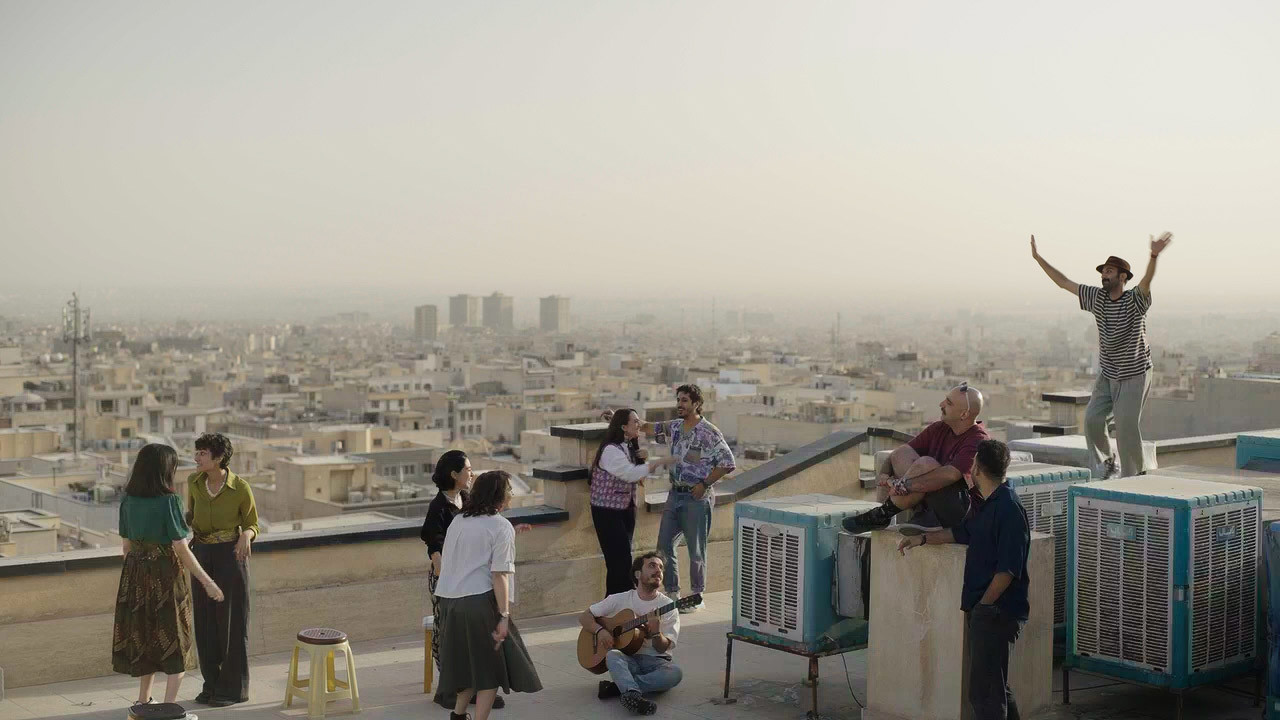
These are the nuts and bolts of challenging our ways of seeing, indispensable in times of domination and war. The most important shift of perspective comes when the performance is over, however, as the writer and her players are basking in the euphoria of bringing their collective act of free self-expression to a successful conclusion. As they mingle with some lingering audience-members, one of them, a young man, praises the performance and begins casually to ask about it. He poses intelligent and increasingly critical questions, about the work’s rather Brechtian turn, for example: was that really of value?
Then the questions take an ominous turn (plot spoilers ahead). Had they received permission for the performance? Wouldn’t it have secured permission quite easily with a few small changes? Wouldn’t that have been better? The penny drops, for her and for us: he works for the regime. This electric moment gains its principal power from still another disruption of our preconceptions, achieved with consummate cinematic craft. The filmmakers have followed the two critical steps: Know your audience; help them see.
We don’t expect them to be smart, educated, to know their Bertolt Brecht. Hostility and violence are not the sole preserve of ignorance and simplicity, however, and here we are again, face to face with a grim truth. He should know better. Shockingly, dispiritingly, he chooses not to. This is his treachery and his menace, and what gives us a chill as the seemingly friendly conversation becomes increasingly judgemental. The smiles and chitchat no longer hide what they now both know: jail is waiting.
Great movies go against the grain of ideology, of the Zeitgeist disguised as common sense. That is their genius and their responsibility, as war clouds gather and attitudes harden. Our most urgent problems are shrouded and twisted by the unholy synergy of ideological individualism and nationalism. Spying ‘Them’ through the lens of the national imaginary and with the diffidence of the self-styled self-made man (sic), we fear those who should really be our natural allies, the other poor souls caught up in a remorseless system of human and planetary exploitation.
Seeing no way of saving each other or our planet we rather prepare ourselves for a damn good scrap among the smoking ruins as, from here to Timbuktu, our empires crumble and our forests burn.
They’re preparing us for war but what if we refuse to be mobilised and choose peace instead? It won’t be easy but, for all their horrific overtones and undertones, respectively, films like AnyMart and The Friend’s House Is Here can put us on the right path.