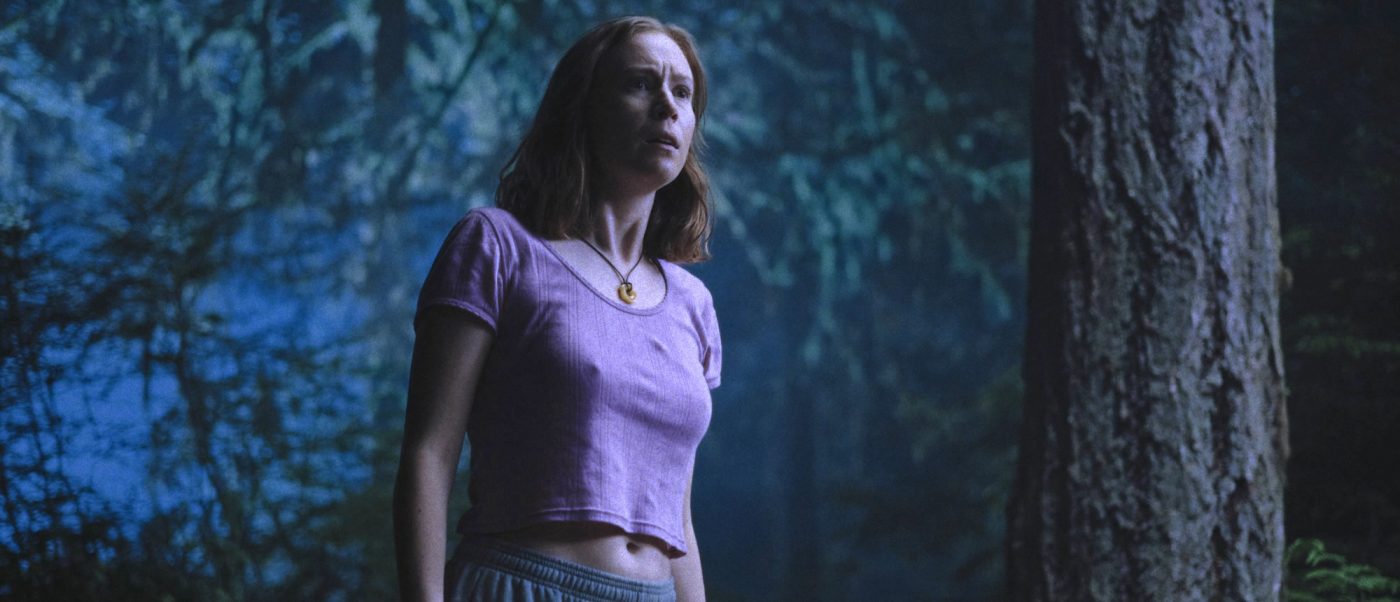
Teenage Sex and Death at Camp Miasma: Don’t Watch Yourself, Watch the Movie
Chama Al Houari (f. 2002) is an aspiring filmmaker from Morocco and Montages’ editorial assistant. She is currently living in Oslo, and is passionate about film history and how movies reflects the world.
*
Teenage Sex and Death at Camp Miasma recognises cinema’s power to shape perception through mythology and emotion.
Most of us like to see ourselves as independent thinkers, Cartesian minds at the wheel of our own perception. Yet the media we have consumed throughout our lives, like an invisible force of nature, draws the outlines within which we see ourselves, other people and the relationship between the two.
Like little sponges, our childhood minds absorb, with awe, the adult world as it is presented to us: its unspoken logic, its binding spells of action and consequence, its all-governing moral orders, what constitutes a crime and how severely it should be punished. Good things happen to good people, and there is a line between good and evil.
It sounds vaguely biblical, because it is. This moral mythology appeals directly to the subconscious, a realm where symbols do not obey the rules of logic. We explore the subversive, read critical theory and engage with radical art, yet a sticky residue remains lodged right where our intellect cannot reach. This deep identification with the images we consume in our youth lies at the heart of Jane Schoenbrun‘s Teenage Sex and Death at Camp Miasma.
In good deconstructive fashion, Teenage Sex and Death at Camp Miasma opens with a film within a film. A retro-style montage dedicated to Camp Miasma, a fictional horror series, establishes its cult status and presents it as the kind of slasher franchise that shapes an entire generation’s relationship to the genre. We are then introduced to Kris, played by Hannah Einbinder, a cerebral and ambitious director tasked with reinvigorating the problematic Camp Miasma franchise with a “woke” reboot. Right away, Schoenbrun delivers a hard-hitting critique of spiritually empty remakes, as Kris sets out to “beat Hollywood at its own game”.
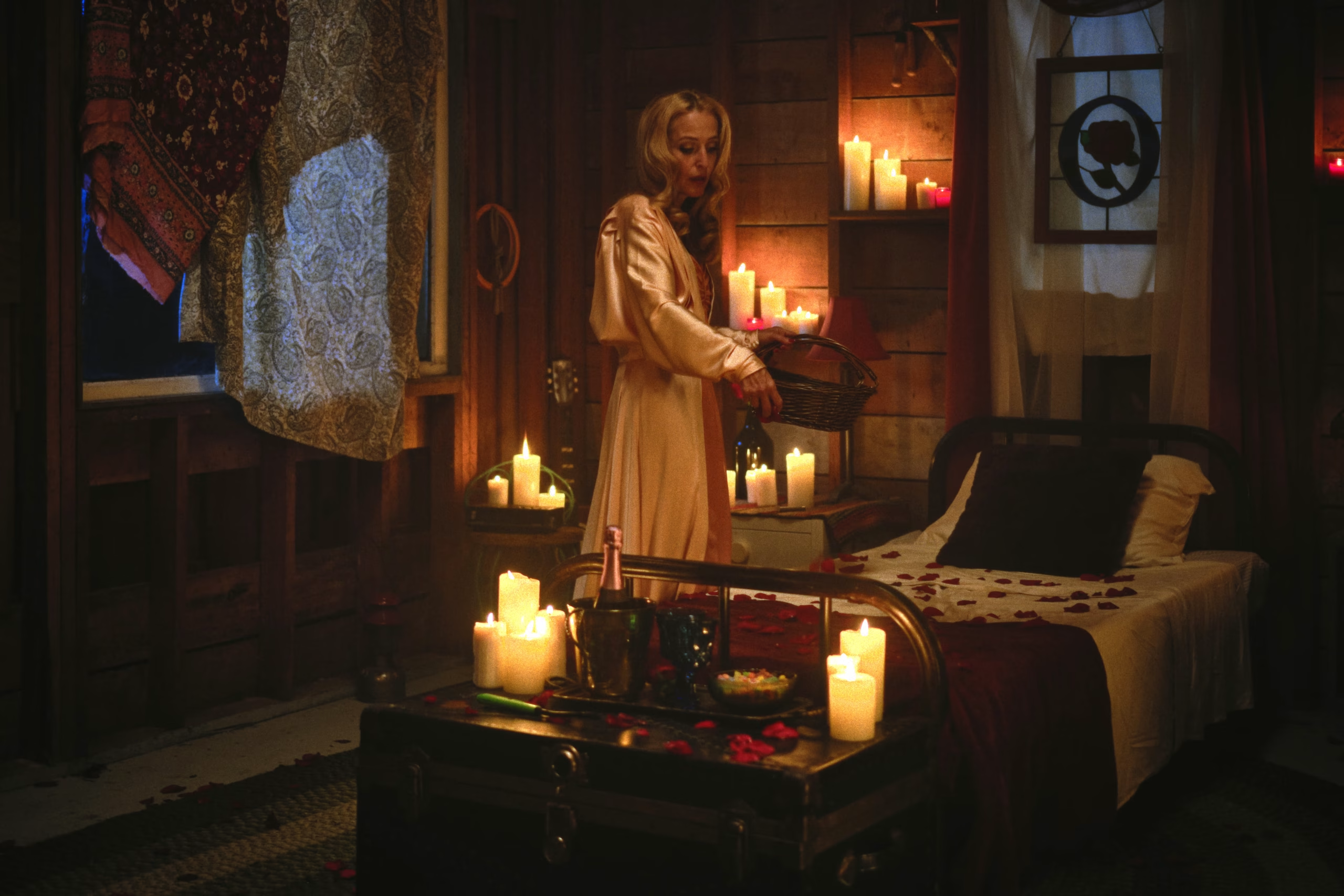
Searching for a meaningful origin story, the young director travels to meet Billy, the reclusive actress fabulously brought to life by Gillian Anderson, who played the final girl in the original Camp Miasma film. The setup promises an escalating horror trope: our protagonist is isolated in a remote location with a mysterious stranger. Schoenbrun plays with these expectations, teasing the audience just as Billy teases Kris’s initial apprehension. The contrast between the two women is evident. What Kris sees as “cultural depictions of monstrosity”, Billy sees simply as “flesh and fluids”. What to Kris is a business meeting is, to Billy, “two people talking about making art together”.
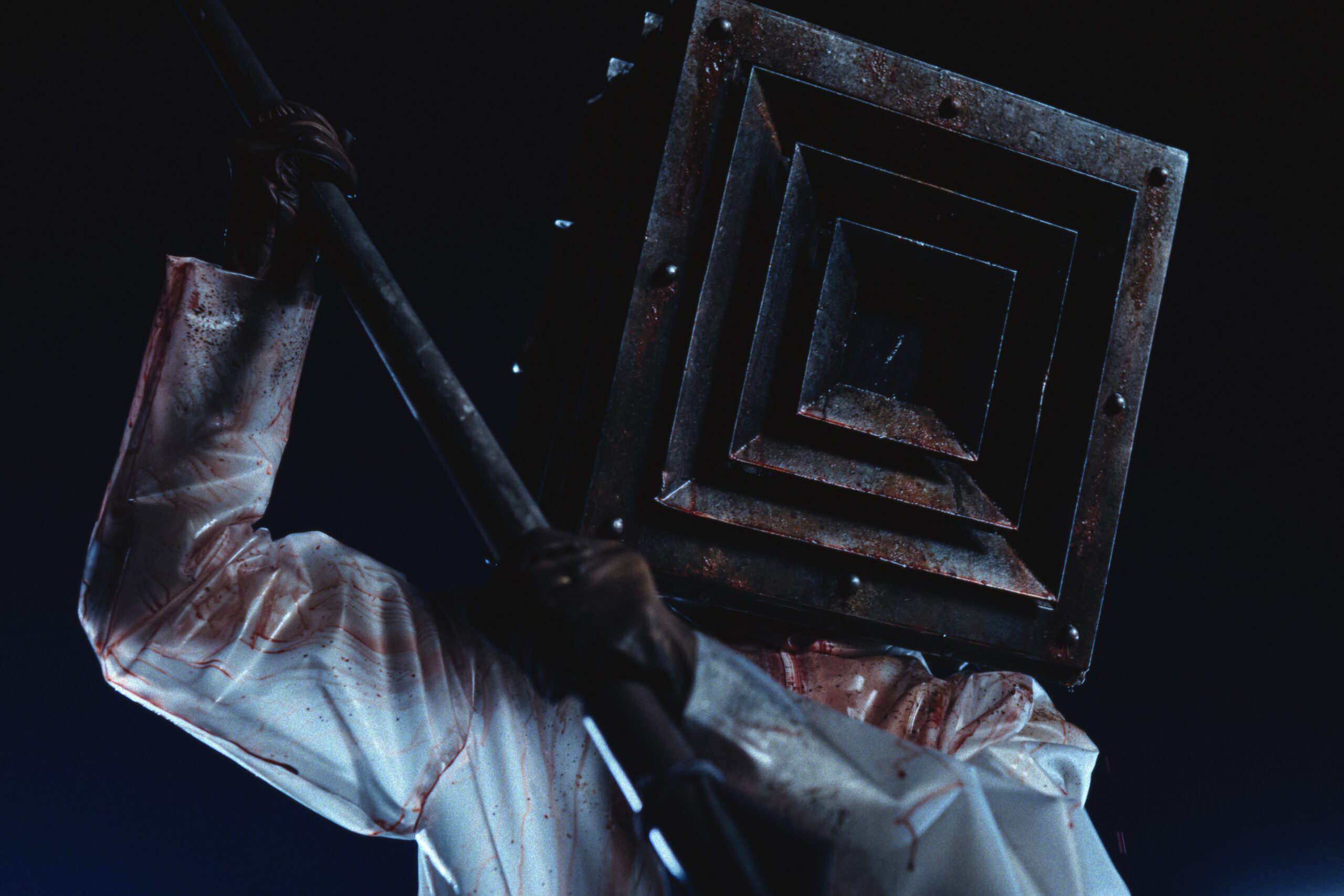
In spite of – or rather because of – their differences, a fascination grows between the two women. They decide to spend more time together, and they, along with us in the audience, watch Billy’s much-anticipated print of the original film. As expected, Camp Miasma is camp: a pastiche of exaggerated slasher tropes, ridiculous and theatrical. A group of teenage counsellors tell scary stories around the campfire, foreshadowing the arrival of Little Death, the franchise’s villain, played by Jack Haven. In the origin story, Little Death’s villainy is explained by a gender-nonconforming identity – a wink back at Kris’s statement on “queerness and cultural depictions of monstrosity”.
Our final girl, Billy’s character, hits the usual notes. Observant, intelligent and sober-minded, she senses danger while her peers engage in mindless debauchery. The young girl is, of course, presented as abstinent, in more ways than one. She steps away from the party – captured in a split-diopter shot – and describes her perspective shifting between watching and being watched, a concept that returns later on. At this point, the film has set up a moral binary: Little Death as the embodiment of deviance, and the final girl as the embodiment of virtue.
The teenagers who do not abstain summon and awaken evil from the depths. One by one, they are gruesomely murdered by Little Death in a sequence of theatrical, Looney Tunes-style gore. The film cuts back to Billy’s character as she is coerced into sexual activity while the killer approaches. What follows is a series of alternating shots of a frightened young Billy and the encroaching Little Death. But as her eyes move upwards, a glint of something transcendent is captured. The tape is abruptly paused right before the moment of impact.
In the screening room, something changes for Kris: beyond wanting to understand the mechanisms behind this transcendence, she now wants to experience it. In Billy’s presence, her desire for comprehension begins to move away from the mind and into the body. Guided by Billy’s experience, the two women embark on a mission to help Kris enter this strange, liminal state of being. It is at this point that Schoenbrun’s signature surrealism makes itself known: strange, glitching images and voyeuristic angles gradually begin to disrupt the story’s narrative logic.
Kris is unable to focus on the act; in her mind, she is at Camp Miasma, awaiting Little Death’s blade. The slasher films of her youth invade the experience, inducing a sense of shame that blocks her surrender to sexual desire. She identifies deeply with the final girls, thoughtful and prudish, while longing to feel embodied and immersed in the experience of surrender. For this transition to occur, the moral line between virtuous innocence and deviant sexuality must be undone. Billy’s reassurance enables Kris to shift her viewer identification, allowing her to gaze upon herself from the killer’s perspective and become “a victim, a slut”. The camera tilts upwards, revealing a Little Death gazing down upon them.
Kris describes her fantasy as misogynistic, condemning her own desire with intellectual severity, while Billy simply sees play: “If it gets too real, you can always turn it off.” Billy’s acceptance gives Kris permission to enter a perspective she deems incompatible with her identity. Kris escapes the weight of judgement, and for a moment she becomes whole, unashamed of the pleasure of her fantasy. Mirroring the Camp Miasma sequence, the scene concludes with alternating shots of Little Death gazing down and Kris’s face looking up – this time in pure bliss.
Ironically, the Christian-coded slasher ideal of purity that Kris analyses remains deep-seated in her psyche precisely because the final girl she identifies with is presented as analytical. The same observant quality Kris uses to critique the genre locks her into identification with the intelligent heroine and, by extension, her virtuous role. This is exactly where intellect alone cannot rearrange attachment, where analysis reinforces emotional identification instead of transcending it. The path forward goes through play and bodily experience.
The film makes clear the generational – or perhaps simply dispositional – contrast between the two women’s approaches to on-screen representation. For Kris, images have real ideological repercussions, a kind of hyperreal quality. In Billy’s world of “flesh and fluids”, however, images are images, not moral indictments or permanent identities. This allows their gravity to fall away, leaving room for nonsense and fantasy.
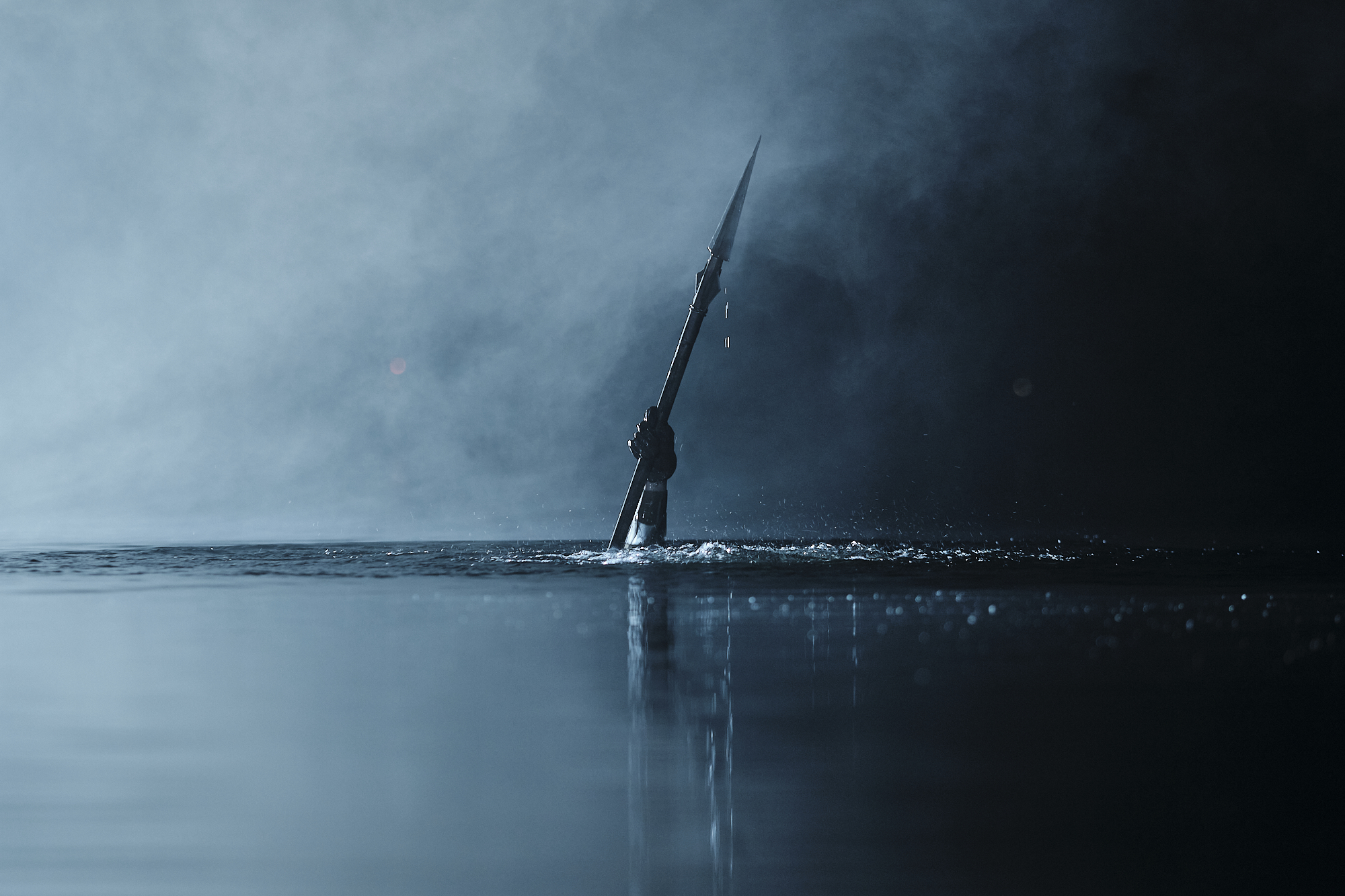
In tandem with this thematic progression, reality and fiction begin to blur. Kris’s proposed origin story leaves the executives stunned. Little Death is not simply a character in a movie; he is the agent who writes our perception of ourselves and, by extension, our stories. He rises once again in a furious rampage. A dreamlike sequence follows in which both Billy and Kris are killed, only to be reborn with a new set of eyes: “Psycho from the perspective of the shower curtain.”
Kris gains the ability to move fluidly between identifications, to watch the full frame of the movie and to relish the “flesh and fluids” of it all. A new movie is made, a new reality is written – this time starring Kris and Billy.
The film’s most powerful moment comes towards the end. A young Kris sits alone in a dark room facing an old television screen. Wide-eyed and captivated, she discovers and absorbs the slasher images that will come to define her complicated relationship to her body and to herself.

Schoenbrun’s genre-bending film is vivid and maximalist in both style and scope – a scope spacious enough to hold horror, surrealism, pastiche and genuine vulnerability with reverence and delicacy. Genre becomes secondary to the story’s emotional core, as Schoenbrun picks and plucks formal sensibilities to serve their uncompromising storytelling. Driving home the earlier critique of empty reboots, Schoenbrun delivers a film that seems derivative on the surface but is in fact wholly original.
There is no way around it: the film is a love letter to the kind of cinema that creates more room in the world – room for people to feel valued in their difference.
Teenage Sex and Death at Camp Miasma recognises cinema’s power to shape perception through mythology and emotion and reclaims that very power by playfully rearranging the usual moral orders, showing that subversion can be achieved beyond academic analysis.
Fantastical counter-mythologies have what intellectual deconstruction lacks: the imagination needed to build new forms of perception.